

How to Choose Exhibition Giveaways by Audience, Quantity and Budget
Choosing exhibition giveaways starts with the conversations you want your booth team to have. A useful item should suit the visitor, be practical to carry and fit a quantity your team can distribute sensibly. Ordering for the exhibition’s entire attendance is rarely a useful starting point.
For Singapore trade shows and business exhibitions, use three decisions: who should receive each item, how many of those visitors you can realistically serve, and how much of the budget should go to each group.
1. Match the giveaway to the booth interaction
A single giveaway can work well when visitors have similar needs. Where your booth serves several audiences, a simple two-level allocation may be easier to justify than giving everyone the same higher-cost item.
| Visitor group | Giveaway approach | Decision to make first |
|---|---|---|
| General visitors stopping for an introduction | A compact item or practical carry bag, if relevant to the campaign | What brief interaction qualifies for a handout? |
| Relevant prospects completing a demonstration | A useful item connected to their working day or the demonstration | Does it replace the general giveaway or come in addition? |
| Booked meetings and existing customers | A reserved allocation with consistent presentation | Who manages the stock and checks meeting attendance? |
Define “relevant prospect” in business terms, such as an appropriate company type and a stated project need. A gift should support the conversation; collecting a badge scan alone does not establish buying intent. Check any recipient or organiser restrictions before offering higher-value items.
2. Choose a small, practical shortlist
Start with the visitor’s likely use after leaving your stand. For a crowded exhibition hall, weight, carrying comfort and space in a work bag may matter more than a large branding area.
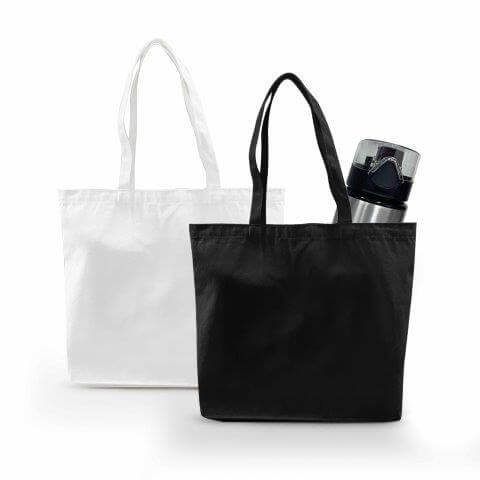
- Tote bags: useful when visitors need to carry material or a planned pack. Compare size, handles, material and the weight of the actual contents in the tote bag collection.
- Small desk giveaways: options such as stress balls can suit a light campaign message. Check that the shape, finish and available print area suit your artwork.
- Portable fans: consider them when the audience and event setting make them useful. Confirm the model, operating instructions, power requirements and packing using our portable fan buying guide.
Avoid adding product types simply to create variety. Each additional design or colour can introduce a separate minimum quantity, artwork setup or packing task. Ask for those conditions by item before choosing a mixed order.
3. Estimate conversations before ordering quantities
Use previous booth records where available: meaningful conversations per day, demonstrations completed, meeting attendance and unused stock. For a first event, make an explicit planning assumption and check it against the number of people staffing the booth.
For example, two staff each handling four ten-minute conversations per hour over five effective hours gives capacity for about 40 conversations a day. This is an illustration, not an attendance forecast. Breaks, group demonstrations, meeting duties and peak periods change the result. General handouts may be quicker, so plan them separately.
Reserve stock by day and by purpose. Keep meeting gifts away from the general handout cartons, with one person responsible for releasing reserve stock.
4. Build a product-level stock sheet
Here is a hypothetical two-day exhibition plan with 200 general recipients and 30 meeting recipients. In this example, meeting visitors receive a tote instead of the small giveaway.
| Item | Planned distribution | Reserve | Planning quantity |
|---|---|---|---|
| Small promotional item | 100 per day × 2 days = 200 | 20 | 220 |
| Tote for booked meetings | 15 per day × 2 days = 30 | 5 | 35 |
That is 230 planned recipients and 255 items including reserves. If every meeting visitor also receives the small item, increase that item’s planned distribution to 230 before deciding its reserve. Do not count the same person twice when reporting unique recipients.
The figures are planning quantities, not confirmed order minimums. A 35-unit branded tote order may not meet the selected product’s minimum. Ask whether to consolidate the selection, change the product or adjust the quantity before approving the order.
5. Compare the complete budget, not just unit prices
Request a quotation showing product quantities, branding, artwork or setup charges, packing, delivery and applicable tax. Compare quotations using the same print specification and delivery requirement.
If the total is above budget, work through these choices:
- Keep broad coverage: simplify the general item or branding while preserving the reserved meeting allocation.
- Prioritise relevant conversations: reduce open handouts and reserve more budget for demonstrations or appointments.
- Simplify fulfilment: use fewer product variations and avoid unnecessary individual packing.
Do not assume buying more creates better value merely because the unit price falls. Compare the total committed cost and a realistic estimate of the number you will distribute. Reusable, undated artwork can make leftover stock easier to use at another suitable event.
6. Give the booth team a clear handout rule
Before opening, brief the team on which visitor receives which item, whether a second item is allowed, daily allocations and who can release reserves. Keep a simple count of stock issued and returned. Record agreed follow-up actions separately from giveaway counts.
After the exhibition, review relevant enquiries, quotations and resulting orders alongside spend and unused stock. These outcomes help decide whether to repeat the item and allocation. A busy booth or an empty carton alone does not show commercial success.
Request a quotation for your exhibition giveaway mix
Send GiftMart the exhibition date, audience, proposed items, quantity per item, total budget range, logo, packing needs and required delivery location. State which quantities are flexible and whether items replace or supplement each other. Product availability, minimums, branding suitability and delivery timing need confirmation for your brief.
For artwork, ordering schedules and venue receiving arrangements, use the main event giveaways buying guide.